Merry Season Retro Wavy Svg Review
As a designer who spends more time than I care to admit staring at stitch charts and debating thread tension, I approach every new embroidery file with a mix of optimism and skepticism. The market is flooded with digital assets, but finding one that translates seamlessly from screen to fabric is a different story entirely. Recently, I pulled up the Merry Season. Retro Wavy Svg to see if it had the potential to be a staple in my seasonal collection for both personal projects and small business merchandise. What follows is a practical evaluation based on real-world application, focusing on how this design performs when it leaves the computer and hits the hoop.
First Impressions: Mood and Visual Personality
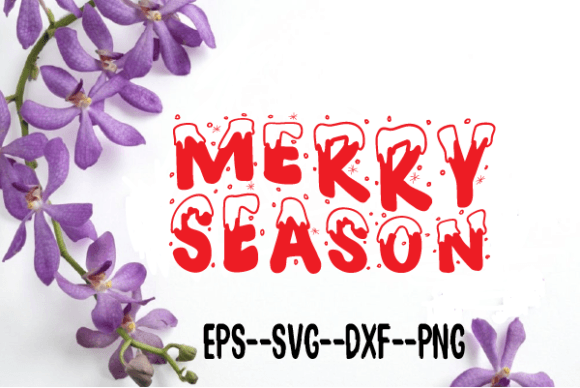
The moment you load the Merry Season. Retro Wavy Svg, the retro aesthetic jumps out. It isn’t just another generic Christmas tree or snowman; it has a distinct personality driven by those wavy, undulating lines that evoke a mid-century modern vibe. For designers looking to break away from the traditional, stiff holiday look, this offers a fresh, playful energy. The layout feels balanced, relying on negative space and fluid curves rather than cluttered details. This is crucial because, in embroidery, less often means more—especially when you are dealing with limited color palettes or smaller hoop sizes.
The mood is festive but sophisticated enough to appeal to adults who want holiday decor that doesn’t scream "craft store." It sits comfortably in the realm of custom apparel and boutique home goods. When I imagine this on a product, I don’t see it as a quick impulse buy; I see it as a piece that adds character to a handmade product line. The visual weight of the waves suggests a design that will hold its own against textured fabrics, provided the stitching parameters are set correctly.
Real-World Application: Where Does It Fit?
I put the Merry Season. Retro Wavy Svg through its paces by visualizing it across several common use cases. The first scenario was a tote bag design for a holiday market stall. On canvas or heavy cotton, the wavy lines would create a striking contrast, especially if paired with a bold, solid background color. The curves allow for a nice flow along the natural drape of the bag, making the embroidery feel integrated rather than slapped on.
Another strong candidate for this design is sweatshirt embroidery. Think of a cozy, cream-colored crewneck with the retro wave pattern centered on the chest or running vertically down the side seam. The softness of the fleece complements the smooth, flowing lines of the graphic. It transforms a basic garment into a statement piece, perfect for an Etsy seller looking to create high-margin items during the Q4 rush. The design’s simplicity also makes it ideal for personalized gifts; adding a name in a complementary script font above or below the waves creates a cohesive, professional look without overwhelming the viewer.
I also considered its viability for baby embroidery. While the retro style is trendy, parents often prefer softer, simpler motifs for infants. However, if rendered in pastel threads on white muslin, the gentle curves could work beautifully for a nursery wall hanging or a blanket border. It bridges the gap between trendy adult fashion and timeless nursery decor, giving you versatility in your craft business inventory.
Technical Performance and Stitching Considerations
Here is where the rubber meets the road. How does a machine embroidery design with wavy lines actually behave? The primary concern with any curvilinear design is stability. Waves can sometimes distort if the fabric shifts or if the stabilizer isn’t robust enough. I strongly advise testing this design on scrap fabric first, using the same stabilizer you plan to use for the final product. A cut-away stabilizer is likely necessary for stretchy knits like sweatshirts, while a tear-away might suffice for stable woven fabrics like tote bags.
Regarding stitch types, the Merry Season. Retro Wavy Svg will likely rely heavily on fill stitch for the main body of the waves and perhaps satin stitch for outlining if the file includes borders. The key here is stitch density. If the fill is too dense, the fabric will pucker, ruining the clean lines of the retro shape. If it’s too sparse, the backing material might show through, making the finished product look cheap. You need to find that sweet spot where the thread coverage is complete but the fabric remains flat.
Thread color selection plays a massive role in the success of this project. Because the design relies on shape rather than intricate detail, color contrast is your best friend. A dark navy wave on a white shirt will pop, while a black wave on a black shirt will disappear. I recommend creating printable mockups in black and white to test the silhouette before committing to expensive specialty threads. Also, consider the fabric texture; a ribbed knit might hide the subtle variations in the wave, whereas a smooth jersey will showcase every curve.
Where to Use It Carefully
While versatile, there are places where this design should be used with caution. Avoid placing it on highly textured fabrics like chunky wool or boucle, as the needle may struggle to penetrate evenly, leading to skipped stitches. Thin fabrics, such as lightweight polyester blends, require extra care to prevent distortion; always use a water-soluble topping if the fabric is prone to shifting. Additionally, be mindful of curved surfaces like caps. While possible, the waves may need slight digitizing adjustments to follow the curve of the hat without bunching up.
Small hoop sizes are another limitation. If you try to shrink this design too much, you risk losing the integrity of the wavy lines. Tiny lettering or decorative accents added to the design may become illegible after stitching. It is best suited for medium to large formats where the eye can appreciate the flow of the graphic.
Commercial Viability and Brand Consistency
For commercial embroidery and small shop owners, the Merry Season. Retro Wavy Svg offers strong potential. Its retro aesthetic aligns well with current trends in design assets that favor nostalgia and minimalism. It helps build brand consistency if your shop focuses on modern, non-traditional holiday themes. Customers trust designs that look professionally executed, and this file provides a clean, recognizable silhouette that photographs well for online listings.
However, before selling finished items or digital products, you must confirm the licensing terms. Just because you purchased the file does not automatically grant commercial rights for unlimited production. Always check the specific license agreement included with the Crafts and Graphics purchase. Ensure you understand whether you can sell physical goods made with the design or if there are restrictions on the number of units. Transparency with your customers about the origin and quality of your designs builds long-term loyalty.
Final Verdict
The Merry Season. Retro Wavy Svg is a solid addition to any designer’s toolkit for the holiday season. It balances aesthetic appeal with practical stitching considerations, making it suitable for a wide range of applications from aprons and kitchen towels to pillow covers and apparel. By paying attention to fabric choice, stabilizer support, and thread contrast, you can transform this simple vector into a stunning embroidered piece that stands out in a crowded marketplace. It is not just a design; it is a foundation for creating memorable, high-quality holiday embroidery projects that resonate with buyers.